Research and development
We are active in larger research associations, primarily in the field of rural development and sustainable land use, for the EU Commission and the EU Parliament, but also within the framework of research programmes such as Horizon Europe. In addition, we carry out research and development projects in national research programmes or on behalf of national ministries and offices, federal state governments and regional clients. Furthermore, we work on R&D projects financed by foundations on topics we have identified ourselves. Providing support and conducting research, we work on the development and implementation of model projects in rural areas in which regional solution strategies are designed and innovative approaches are developed and tested.
In each case, methodological approaches adapted to the project's research questions are used. At this, various methods, for example from the fields of qualitative and quantitative social research, political and business sciences or geosciences, are applied and combined. A central focus of our work is on transdisciplinary and participatory approaches.
The results from the R&D projects are incorporated into our consultancy work, expert reports or specialist events, as well as into policy briefs, guides and practical manuals.
Projects in the thematic field
Agricultural policy and rural development
Tools4CAP: Support decision-makers with policy tools
![[Translate to English:]](/fileadmin/_processed_/c/5/csm_Logo_Tools4Cap_7ea6b68e28.png "[Translate to English:]")
Tools4CAP - which stands for “Innovative Toolbox empowering effective CAP governance towards EU ambitions” - is a four-year project funded with 4 million Euros by the Horizon Europe programme for research and innovation. It will support the…
Details »Pilot project - Establishing an operational programme: structuring the agri-food sectors to safeguard the handing-on of family farms and the sustainability of local agriculture
On behalf of DG AGRI (Directorate-General for Agriculture and Rural Development), Ecorys is conducting a Europe-wide pilot project on the expansion of funding opportunities for operational programs of producer organizations. The IfLS is contributing…
Details »Ad-hoc study on ways to strengthen the climate protection aspect of agricultural support programmes in the scope of the evaluation of MEPL III (Rural Development Plan of Baden-Wuerttemberg 2014-2020)

The study commissioned by the Baden-Wuerttemberg Ministry of Food, Rural Areas and Consumer Protection (MLR) is dedicated to the question of how climate protection can be strengthened in Baden-Wuerttemberg's agricultural support programmes.
While…
Details »Strategies and measures for climate protection in agricultural land use in the context of the CAP

In a project financed by the Landwirtschaftliche Rentenbank, the Institute for Rural Development (IfLS) dealt with the question of how climate protection is addressed in Germany with measures of the Common Agricultural Policy of the European Union…
Details »Sustainable land use
RegioBlau – Water Retention in Public and Private Forests: Regional Governance and Awareness-Raising
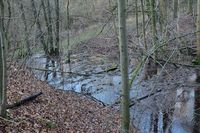
Water-related forest ecosystem services contribute significantly to the stability and resilience of forests and influence the provision of other ecosystem services. Proven water retention measures should be applied to privately and publicly owned…
Details »Developing regional value chain networks for communal catering — RegioWertGeBen

The RegioWertGeBen project aims to develop innovative and practicable approaches to strengthen regional, organic communal catering. The project works in two pilot regions - Ludwigsburg-Stuttgart and North Hesse – and uses the example of the vegetable…
Details »AFaktive - Agroforestry as a Key to improve Water Management & Adaptation to Extreme Weather Events

Modern agroforestry, as a nature-based solution that combines trees and/or shrubs with traditional agriculture, can help to improve landscape water retention and thus contribute to protection against drought, erosion and flooding. In view of the need…
Details »Target fulfilment monitoring and evaluation in accordance with the Baden-Württemberg Act for the Strengthening of Biodiversity- "BW Biodiv"

On 22 July 2020, the so-called "Biodiversitätsstärkungsgesetz" (Act for the Strengthening of Biodiversity) was passed by the state parliament of Baden-Wuerttemberg. In this law, the existing Nature Conservation Act ("NatSchG") and the existing…
Details »Rural areas
Climate protection and adaptation
GRACE - Growing Climate Resilience in Remote rural Areas through Community Empowerment
The project GRACE – Growing Climate Resilience in Remote rural Areas through Community Empowerment is carried out by an international consortium under the European Horizon Mission.
Together with local stakeholders and research institutions,…
Details »AFaktive - Agroforestry as a Key to improve Water Management & Adaptation to Extreme Weather Events
Modern agroforestry, as a nature-based solution that combines trees and/or shrubs with traditional agriculture, can help to improve landscape water retention and thus contribute to protection against drought, erosion and flooding. In view of the need…
Details »Use of biochar in agriculture: Opportunities and limits

Due to the need to curb climate change, options for actively removing the greenhouse gas carbon dioxide (CO2) from the atmosphere are increasingly coming into focus. One way of converting carbon into a very stable form and preserving it over a long…
Details »Multi-actor and transdisciplinary development of efficient and resilient MIXED farming and agroforestry-systems – MIXED

The European MIXED project aims to promote the development of mixed agricultural and agroforestry systems in Europe in the face of more extreme weather conditions. It is studying the benefits of these systems in terms of climate, environment and…
Details »Large-scale protected areas and cultural landscapes
Biosphere Reserves as Model Regions for Circular Economy in Rural Areas

In the years 2024 and 2025 the IfLS Consulting and Projects is exploring the potentials of a systematic circular economy in rural areas. In this context, biosphere reserves serve as model regions for strategic approaches.
Circular economy (CE) is no…
Details »NaBioKom: Nature parks and biosphere reserves as regional communication platforms for sustainable forest management
Diverse demands on the forest and uses are associated with different interests, including those of forestry and nature conservation actors, which require a fact-based dialogue. The goal of sustainable, near-natural forest management is to balance the…
Details »Quality management in German biosphere reserves - Further development of criteria, recommendations and implementation strategies – BRuNa-Q

The IfLS carries out the R&D project "Quality Management in German Biosphere Reserves - Development of Criteria, Recommendations and Implementation Strategies for the Federal Agency for Nature Conservation (BfN). The IfLS is working on the project in…
Details »Quality management and improvement of the German UNESCO biosphere reserves – Operationalization of National Recognition and Assessment Criteria for Sustainable Management
To be acknowledged as UNESCO biosphere reserve (BR), the BR have to fulfill a total of 40 criteria. These are so-called recognition criteria (A) and assessment criteria (B). On the one hand, specific structural and functional aspects of a BR are…
Details »Regional development
Developing regional value chain networks for communal catering — RegioWertGeBen
The RegioWertGeBen project aims to develop innovative and practicable approaches to strengthen regional, organic communal catering. The project works in two pilot regions - Ludwigsburg-Stuttgart and North Hesse – and uses the example of the vegetable…
Details »Establishing regional processing structures - How can the trend be reversed?

The German food system has a low level of self-sufficiency in many food sectors. The relevance of imports is correspondingly high in many areas and the resilience of the food system with regard to possible crises is low. However, ecological location…
Details »Actor networks and multifunctional spaces for art, culture and creative work in rural regions - AMuRaKK

The research project investigates how art, culture and creative workers are integrated into actor networks and how they develop, use and design multifunctional spaces together with local civil society actors and municipal administrations in rural…
Details »Potentials of the circular economy for rural development in Germany and Europe
Circular economy means that products and materials are used in cycles, reused or processed into new products. Raw materials are thus no longer lost by being landfilled or incinerated. The circular economy promises resource-efficient solutions.…
Details »Socio-economics of farm business
Study of the Potential of Mobile Slaughtering for Small and Medium-Sized Slaughterhouses

The increasing consolidation of the slaughter industry means that farms with relatively small land areas and livestock herds must either adapt to ever-larger, centralized slaughter facilities or find alternatives to them. In the slaughter industry,…
Details »The Impact of an Increasingly Consolidated Banking Sector on Agricultural Lending

Over the past few decades, both the agricultural structure in Germany and the banking structure have undergone changes. In both sectors, there is a trend toward larger units. Farms are expanding their livestock herds and the amount of farmland they…
Details »Establishing regional processing structures - How can the trend be reversed?
The German food system has a low level of self-sufficiency in many food sectors. The relevance of imports is correspondingly high in many areas and the resilience of the food system with regard to possible crises is low. However, ecological location…
Details »Organic eggs from small production units - Current and alternative utilization of non-marketable eggs
In recent years, the number of farms with small flocks of laying hens (100 - 3,000 hens) has increased. This increase has been observed in both the organic and conventional sectors and logically also causes an increase in so-called dirty, cracked and…
Details »International cooperation
Study: ‘Agricultural and rural transformation in Europe’
Agricultural and rural structural change indicates a long-term process of transformation regarding social and economic aspects, in which the primary sector becomes less significant compared to the secondary and third sector. Causes underlying are of…
Details »Synergies between conservation and food security
The UN estimates that one billion people suffer from chronic hunger and malnutrition. In the past, mainly natural disasters triggered food crises. Today it is the combination of natural and human causes. High food and commodity prices were…
Details »Knowledge and innovation
Study of European Innovation Partnerships with a Focus on Animal Welfare
Agricultural businesses are subject to constant changes in social expectations, political conditions, and environmental factors, and must adapt to these in order to survive and remain competitive.
For some time now, societal expectations and legal…
Prepared for change – Peer-to-peer learning among farms
In the context of structural change in agriculture, diversification is becoming increasingly important for farms. The demands placed on farmers to deal with such and other farm changes make learning processes in which the necessary skills are…
Details »The Impact of Research on EU Agriculture – IMPRESA

IMPRESA was a 38 months research project implemented between November 2013 and December 2016. It comprises nine participants from Research Institutes, Universities, International Organisations and an SME, from six European countries.
The IMPRESA…
Details »Strengthening innovation processes for growth and development – IN-SIGHT
The IN-SIGHT project will contribute to an improved knowledge of innovation systems and processes. Emphasis throughout the project is on gaining a better understanding of linkages in research-practice innovation chains and networks. A guiding idea is…
Details »Governance and cooperation
Sustainability and resilence
Study of European Innovation Partnerships with a Focus on Animal Welfare
Agricultural businesses are subject to constant changes in social expectations, political conditions, and environmental factors, and must adapt to these in order to survive and remain competitive.
For some time now, societal expectations and legal…
Rethinking the links between farm modernization, rural development and resilience in a world of increasing demands and finite resources – RETHINK

A transdisciplinary research project supported by the European Commission and national funding bodies under the umbrella of FP7 and the RURAGRI ERA-NET
Important questions need attention: How do market forces, societal demands and resource…
Details »Sustainable development of cultural landscapes using integrative landscape concept
In cooperation with the Institute for Spatial Planning and Development Planning (IREUS) at the University of Stuttgart, the Institute for Rural Structural Research (IfLS) is developing an integrative landscape model based on the example of the…
Details »Addressing biodiversity and habitat preservation through Measures applied under the Common Agricultural Policy – CAP-Biodiv
With regard to the biodiversity goals 2020 this study analyzes the biodiversity protection potentials of various agricultural policies. The study is carried out by the Institute for European Environmental Policy (IEEP). As subcontractor the IfLS will…
Details »