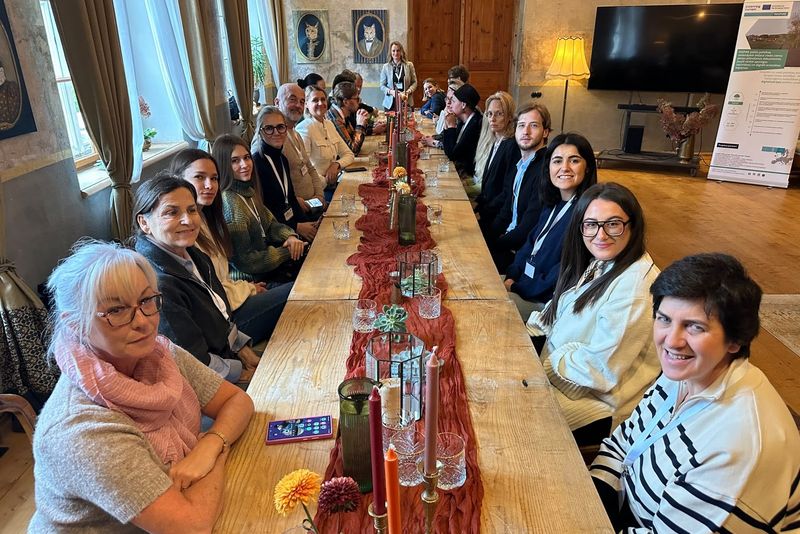
Together with representatives from the Lahn-Dill-Wetzlar Local Action Group (LAG) and a representative from the Hessian Ministry of Economic Affairs, we at IfLS were guests of our project partner, the Zemgale Planning Region. The occasion: the INSPIRE – Innovative and Smarter Policy Instruments for Rural Europe – partner meeting. The topic concerned us all: the question of how villages can shape their own future.
What actually makes a village ‘smart’? Not a nationwide 5G network, not every local authority app, and certainly not digitalisation at any cost. The fundamental idea behind the Smart Village approach is quite different: empowering villages to take control of their own development – bolstered by digitalisation and supported by committed communities. So ‘smart’ always starts with local needs, not with technology. Digitalisation is a tool, not an end in itself.
In Germany, we are discussing this approach with the LEADER region of Lahn-Dill-Wetzlar: the Local Action Group has long since taken on the role called for by the Smart Village approach. It builds bridges between citizens, local authorities, the administration and the business community, sets priorities from the bottom up and translates ideas from citizens’ assemblies into concrete projects.
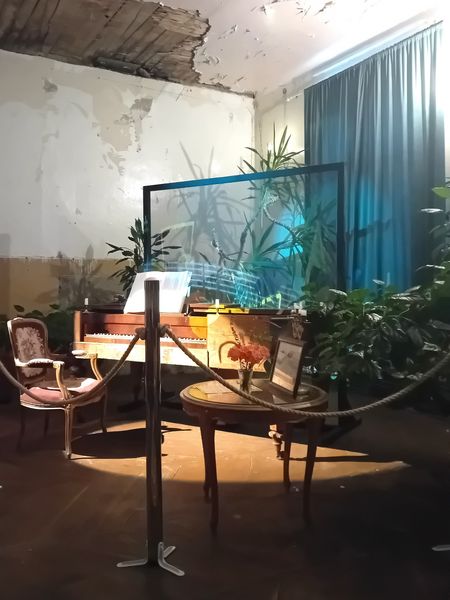
The exchange with our European partners is a constant source of inspiration for our work in the region – and for the LEADER policy instrument as a whole. In Latvia, we observed and discussed how ‘Smart Villages’ are actually being put into practice there: in workshops, we explored the ‘habitability’ concept as an approach to analysing the status quo – what really makes a village habitable and worth living in? There were also presentations on village development and the opportunity to experience digital applications in practice – such as augmented reality in tourism at locations where guided tours would not be viable.
We also discussed the idea of a ‘Smart Village Award’ – including the fascinating question of what evaluation criteria such an award would need to be based on. This, too, demonstrates that the Smart Village approach is about the big picture – the economy, daily life, mobility, people, the environment and governance.
We are taking plenty of food for thought back to Hesse – to feed into our ongoing discussion on how the Lahn-Dill-Wetzlar region’s Local Development Strategy 2023–2027 can become even ‘smarter’.
Find out more about the project: interregeurope.eu/inspire
Contact persons at IfLS: Hanna Kramer (kramer[at]ifls.de); Dr. Ulrich Gehrlein (gehrlein[at]ifls.de)