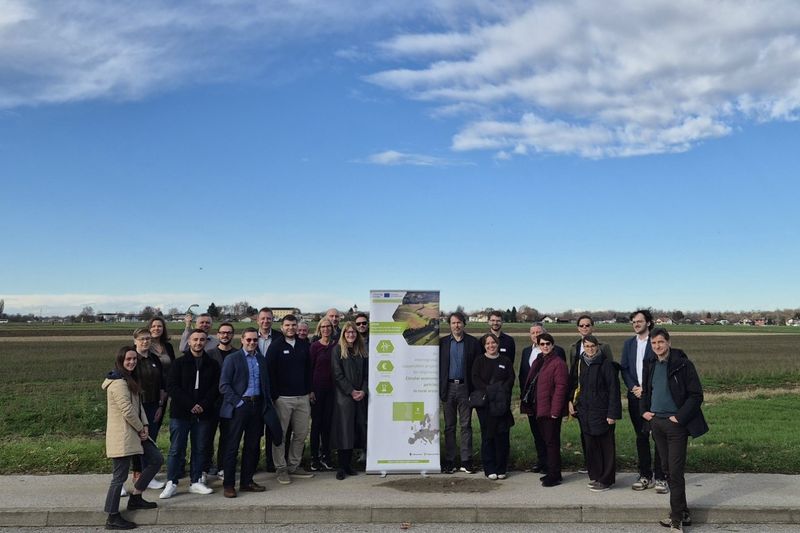
For three days, the European exchange of experiences on the topic of the circular economy took center stage at the fourth partner meeting held as part of the Interreg Europe project iCEAR—this time in Slovenia. Project partners from a total of nine countries—including representatives from Albania, a partner outside the European Union—came together to develop ways to promote the principles of circularity through the policy instruments of each partner. To this end, the IfLS is collaborating with the district of Giessen to further develop its “100% Climate Protection” master plan and harness the potential of the circular economy to reduce greenhouse gas emissions. Other partners are exploring possible adjustments to their operational programs for the ERDF or LEADER strategies.
From the Linear Model to Closed-Loop Systems
All participants agreed that the transition from a linear economic model to material and value-added cycles that are as closed-loop as possible is a crucial step toward a sustainable future. However, since the economic and structural conditions vary greatly among the participating countries, implementation ultimately requires tailored approaches.
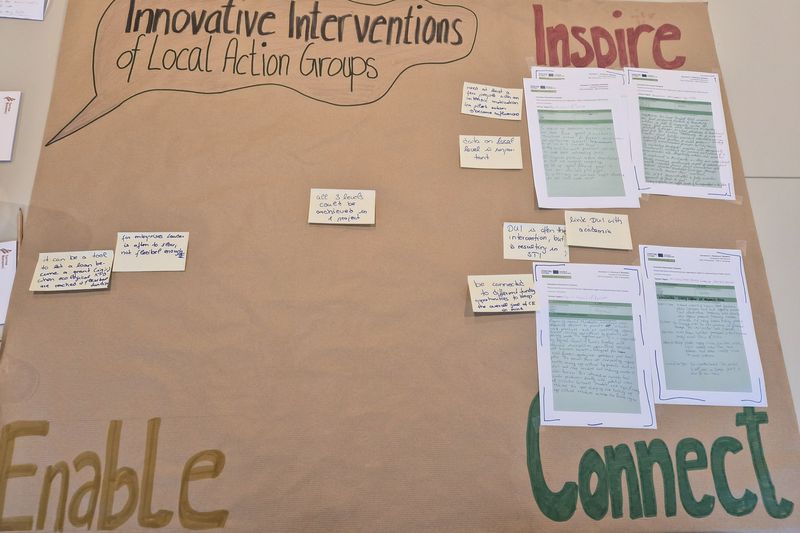
During intensive workshops, the partners discussed which areas should be the focus of strategic implementation:
- Networking among stakeholders: The targeted development of networks to connect businesses, research institutions, and government agencies along value chains.
- Targeted project funding: The creation of a financial framework to bring innovative projects to fruition.
- Education and awareness-raising: Measures to raise awareness and develop skills in the regions.
The goal of this collaborative effort is to develop concrete recommendations and improvements for operational programs, LEADER instruments, and regional development planning.
Practical Insights and European Exchange
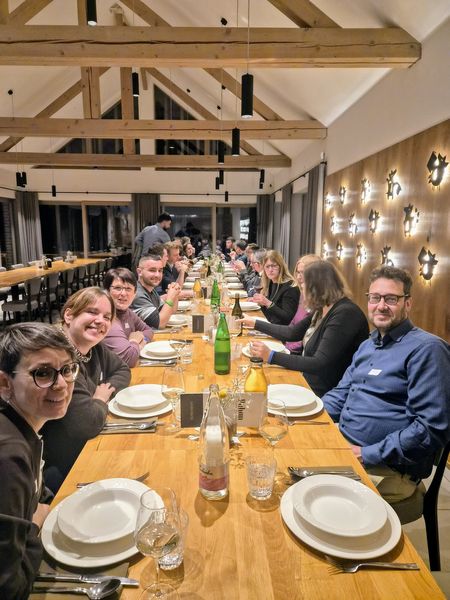
The meeting was organized by the partner organization DA Synerjia from Slovenia in collaboration with the IfLS. In addition to the technical working sessions, the program included field trips to regional best-practice projects that successfully implement circular approaches in practice. Complemented by joint networking events, the meeting not only contributed to the transfer of technical knowledge but also strengthened cross-border cooperation both within and beyond the EU’s borders.
Contact person at IfLS: Dr. Ulrich Gehrlein (gehrlein[at]ifls.de)